Here's a confession: I used to buy teriyaki sauce in a bottle. For years. It lived in the back of the fridge, slightly crusty around the cap, pulled out whenever I wanted to make something vaguely Asian-inspired seem fancier than it was.
Then I made teriyaki sauce from scratch exactly once, and I felt like I'd been lied to my entire adult life.
It takes five minutes. Five ingredients you probably already have. And the difference isn't subtle—it's the difference between "fine, this is food" and "wait, why does this taste like an actual restaurant?"
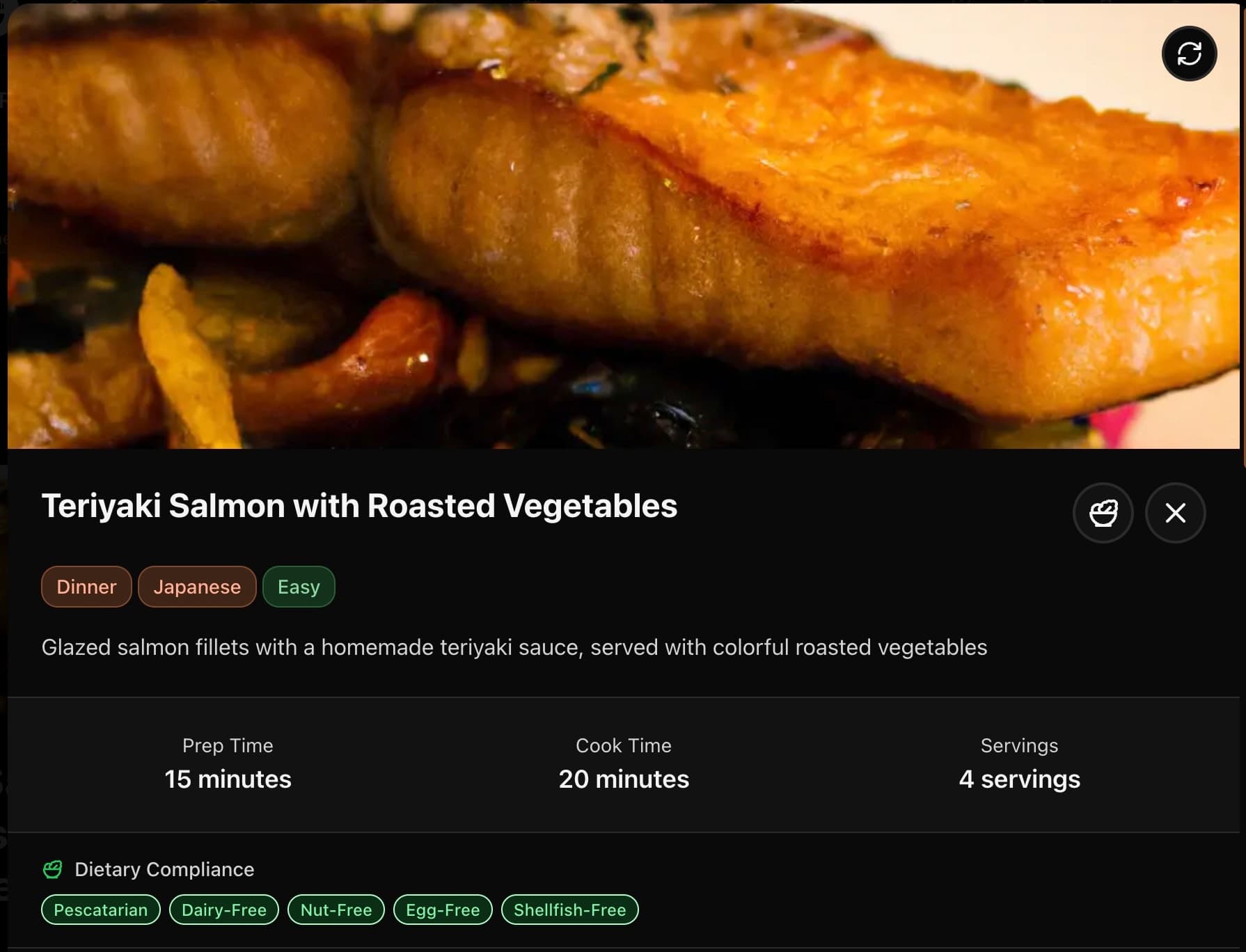
This week's meal puts that homemade sauce front and center: glazed salmon fillets with a sticky, ginger-garlic teriyaki that caramelizes beautifully in the oven. Paired with simple roasted vegetables, it's a complete dinner in about 35 minutes—and most of that time, the oven is doing the work.
The Joy of DIY Teriyaki
Let's talk about why homemade teriyaki is worth the tiny bit of extra effort.
Store-bought teriyaki sauce is... fine. It does the job. But it's also been sitting on a shelf for months, which means it's loaded with preservatives and stabilizers to keep it from separating. The flavors are muted, one-note, designed to be inoffensive rather than exciting.
Homemade teriyaki is alive. Fresh garlic and ginger hit your nose the moment they hit the warm pan. The sauce bubbles and reduces, concentrating into something glossy and complex. You can taste the individual components—the savory depth of soy sauce, the subtle sweetness of mirin, the warmth of ginger—while they somehow become more than the sum of their parts.
And here's the fun part: you're in control. Want it sweeter? Add more brown sugar. More gingery? Go heavy on the fresh ginger. Like heat? A pinch of red pepper flakes transforms it entirely. Store-bought doesn't give you that.
There's also something satisfying about watching the sauce come together. You start with thin, watery ingredients simmering in a pan. You add a cornstarch slurry, stir for a minute, and suddenly—alchemy. The sauce thickens, turns glossy, clings to a spoon. You made that. Five minutes ago it was just stuff in bottles, and now it's sauce.
Once you've done it once, you'll never go back to the bottle. It's that kind of revelation.
The Meal
This recipe builds a complete dinner around that homemade teriyaki. The salmon gets seared on the stovetop for a golden crust, then finished in the oven with the sauce glazing over it. Meanwhile, a sheet pan of colorful vegetables roasts alongside—broccoli, bell peppers, and carrots that get tender and slightly caramelized at the edges.
Everything comes together at the same time with minimal juggling. The vegetables roast while you sear the salmon. The salmon finishes in the oven while the vegetables get their last few minutes. You pull both out, plate, drizzle with extra sauce, and dinner is ready.
It's the kind of meal that looks like you spent an hour on it but actually required about 15 minutes of active effort.
The Recipe
Teriyaki Salmon with Roasted Vegetables
Prep time: 15 minutes | Cook time: 20 minutes | Serves 4
Pescatarian, dairy-free, nut-free, egg-free, shellfish-free
Ingredients
For the teriyaki sauce:
- ¼ cup soy sauce
- 3 tablespoons mirin (sweet rice wine)
- 2 tablespoons sake or dry sherry
- 2 tablespoons brown sugar
- 2 cloves garlic, minced
- 1 tablespoon fresh ginger, minced
- 1 teaspoon cornstarch
- 1 tablespoon water
For the salmon:
- 4 salmon fillets (6 oz each), skin-on
- 1 tablespoon olive oil
- Salt and black pepper
- 1 tablespoon sesame seeds (white or black)
- 2 tablespoons green onions, sliced
For the vegetables:
- 2 cups broccoli florets
- 2 cups bell peppers (mixed colors), chunked
- 1½ cups carrots, cut into batons
- 2 tablespoons olive oil
- ½ teaspoon salt
- ¼ teaspoon black pepper
Instructions
-
Preheat and prep. Get your oven to 425°F. Line a large baking sheet with parchment paper.
-
Make the sauce. In a small saucepan, combine soy sauce, mirin, sake, brown sugar, garlic, and ginger. Bring to a simmer over medium heat, stirring occasionally, for 3-4 minutes until the sugar dissolves and the kitchen starts smelling incredible. In a small bowl, mix cornstarch with 1 tablespoon water. Add this slurry to the simmering sauce and stir constantly for 1-2 minutes until it thickens and turns glossy. Remove from heat and set aside.
-
Start the vegetables. Toss broccoli, bell peppers, and carrots with olive oil, salt, and pepper. Spread in a single layer on the baking sheet. Roast for 15 minutes, stirring halfway through.
-
Prep the salmon. While vegetables roast, pat salmon fillets very dry with paper towels. Season lightly with salt and pepper on both sides.
-
Sear the salmon. Heat an oven-safe skillet over medium-high heat with 1 tablespoon olive oil. When the oil shimmers, place salmon fillets flesh-side down (skin-side up). Sear without moving for 3-4 minutes until a golden crust forms. Flip carefully and cook another 1-2 minutes on the skin side.
-
Glaze and finish. Reduce heat to medium and pour about half the teriyaki sauce over the salmon, coating evenly. Transfer the skillet to the oven and bake 6-8 minutes until the salmon reaches 145°F and flakes easily.
-
Plate and serve. Divide roasted vegetables among plates. Place salmon on top or alongside. Drizzle remaining teriyaki sauce over each fillet and garnish with sesame seeds and sliced green onions.
Tips for Success
On the sauce: The cornstarch slurry is what gives teriyaki its signature glossy, clingy texture. Make sure to mix the cornstarch with cold water before adding—if you dump dry cornstarch into hot liquid, you'll get lumps.
On the salmon: Skin-on fillets work best here. The skin protects the bottom of the fish during searing and crisps up nicely. If you're not a skin eater, it peels off easily after cooking.
On timing: Start your sauce first (it can sit while you do everything else), then vegetables, then salmon. The vegetables need 15 minutes; the salmon needs about 10 total. They'll finish around the same time.
On the mirin: If you can't find mirin, you can substitute with a tablespoon of rice vinegar plus an extra tablespoon of brown sugar. It won't be identical, but it'll work.
Make It a Series
Once you've mastered homemade teriyaki, the sauce becomes a building block for dozens of meals. Brush it on chicken thighs. Toss it with stir-fried vegetables and rice. Use it as a marinade for grilled shrimp. Drizzle it over a grain bowl.
The recipe makes enough for this meal with extra for drizzling—but you can easily double it and keep a jar in the fridge for the week. Unlike the store-bought stuff, you'll actually use it because it actually tastes good.
This recipe was suggested by Taistful for someone looking for healthy, flavorful weeknight dinners with minimal prep. Want meal ideas tailored to your preferences? Try Taistful free.